YouTube Deep SummaryYouTube Deep Summary

Star Extract content that makes a tangible impact on your life
Video thumbnail

STOP Taking Random AI Courses - Read These Books Instead

Egor Howell β€’ 2025-06-14 β€’ 18:21 minutes β€’ YouTube

πŸ“š Chapter Summaries (6)

πŸ€– AI-Generated Summary:

The Ultimate Guide to Learning AI: Recommended Resources for Aspiring AI Practitioners

After working in AI and machine learning for over four years, I’ve gathered a wealth of knowledge and experience about the best resources to kickstart and advance your journey in artificial intelligence. Whether you’re a complete beginner or looking to deepen your expertise, this guide breaks down essential learning materials across five key categories:

  • Programming and Software Engineering
  • Mathematics and Statistics
  • Machine Learning
  • Deep Learning and Large Language Models (LLMs)
  • AI Engineering and Production Deployment

Let’s dive in.


1. Programming and Software Engineering

Strong programming and software engineering skills are foundational for working in AI. Greg Brockman, CTO of OpenAI, emphasizes this point as well.

Why Python?

While AI is a rapidly evolving field without a fixed β€œde facto” language, Python remains the dominant language today. Its extensive ecosystem of machine learning libraries and frameworks makes it indispensable. Most AI jobs evolved from traditional machine learning roles where Python is the lingua franca β€” and this is unlikely to change anytime soon.

Beyond Python

However, the role of an AI engineer increasingly resembles software engineering, with backend languages like Java, Go, or Rust gaining importance. Personally, I use Rust in my day job, which highlights how diverse your skillset can be.

Recommended Resources:

  • Learn Python Course by freeCodeCamp: A 4-hour beginner-friendly course covering Python fundamentals.
  • Python for Everybody Specialization (Coursera): One of the most popular Python courses with a strong reputation.
  • HackerRank and LeetCode: Great platforms to practice coding problems and prepare for interviews.
  • NeetCode: Excellent for learning data structures, algorithms, and system design β€” vital for software engineering roles.
  • Harvard CS50 Introduction to Computer Science: The gold standard for absolute beginners to learn computer science fundamentals and programming.

Tip: The best way to learn programming is by practicing. Use these resources to grasp fundamentals, then start building projects and solving problems consistently.


2. Mathematics and Statistics

Some argue that you don’t need deep mathematical knowledge since many large language models (LLMs) are used out-of-the-box. I disagree β€” understanding the math behind these models is key to mastering AI.

Core Areas to Focus On:

  • Statistics
  • Linear Algebra
  • Calculus

Top Resources:

  • Practical Statistics for Data Scientists: Applied statistics with hands-on Python examples, perfect for data science, machine learning, and AI.
  • Mathematics for Machine Learning (Textbook): Covers linear algebra and calculus. It’s dense, so focus on relevant chapters.
  • Mathematics for Machine Learning and Deep Learning Specialization (DeepLearning.AI): A targeted course designed specifically for AI and machine learning applications.

These three resources will comprehensively cover the math skills you need for a lifelong career in AI.


3. Machine Learning

A Brief History

AI as a concept dates back decades. Today’s AI boom, especially generative AI like ChatGPT, is just one facet of this broad field.

Essential Machine Learning Resources:

  • Hands-On Machine Learning with Scikit-Learn, TensorFlow, and Keras (Book): The ultimate practical guide, covering fundamentals, application, and advanced topics like reinforcement learning and autoencoders. If you get just one book, this is it.
  • Machine Learning Specialization by Andrew Ng (Coursera): One of the best and oldest ML courses, revamped to use Python. It offers a solid theoretical and practical foundation.
  • The 100-Page Machine Learning Book by Andriy Burkov: A concise overview ideal for quick reference and grasping broad concepts.
  • The Elements of Statistical Learning (Textbook): A deep dive into statistical learning methods; more theoretical and dense but invaluable for understanding classical ML algorithms.

Bonus Recommendation:

  • Zero to Mastery’s Complete AI, Machine Learning & Data Science Bootcamp: If you want a project-based, career-focused bootcamp, this one is exceptional. It teaches you how to build real-world applications and has a large community supporting learners.

4. Deep Learning and Large Language Models (LLMs)

Deep learning powers modern generative AI models β€” understanding it is crucial if you want to work with LLMs, diffusion models, and transformers.

Start with PyTorch

There are two main deep learning libraries: TensorFlow and PyTorch. I recommend PyTorch because:

  • It’s widely used in research (77% of papers in 2021)
  • Most Hugging Face models (92%) are PyTorch-exclusive
  • It’s becoming the industry standard

Recommended Learning Path:

  1. Deep Learning Specialization by Andrew Ng: Covers CNNs, RNNs, and foundational deep learning concepts.
  2. Introduction to LLMs (Video by Andrej Karpathy): A one-hour overview of generative AI and large language models.
  3. Neural Networks Zero to Hero by Andrej Karpathy: Builds deep learning from scratch using PyTorch and numpy β€” ending with building a GPT model from the ground up.
  4. Hands-On Large Language Models by Jay Alammar (Textbook): Written by the author of the famous β€œIllustrated Transformer” blog, this book is the best up-to-date resource on understanding transformers and LLMs intuitively.

5. AI Engineering and Production Deployment

Having theoretical knowledge is great, but real impact comes from deploying AI models into production to solve real-world problems.

What is AI Engineering?

Most AI jobs today are AI engineering roles β€” closer to software engineering. Rather than building models from scratch, AI engineers integrate, optimize, and deploy pre-trained foundational models like LLaMA, Claude, or ChatGPT.

Recommended Books on AI Engineering:

  • Practical MLOps: Focuses on deploying traditional machine learning models, covering containerization, Docker, cloud systems, and more.
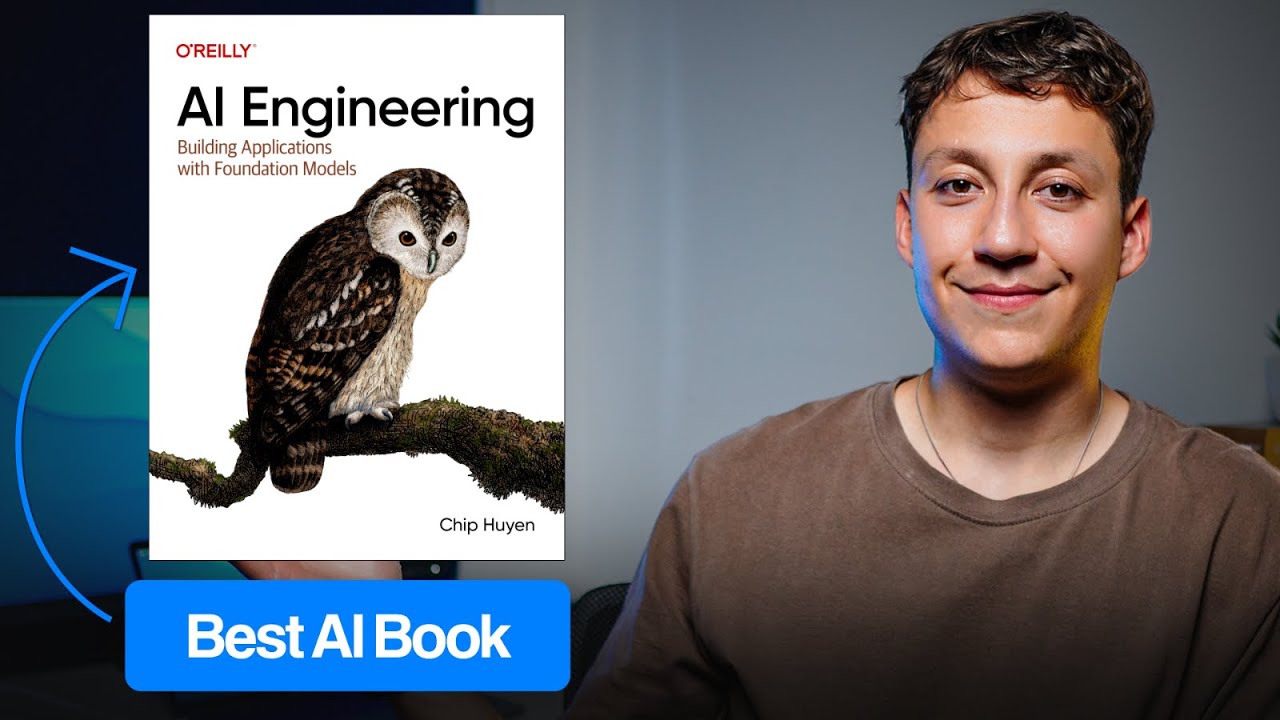
  • AI Engineering (Textbook by Chip Huyen): A comprehensive and highly recommended book by a leading expert on deploying AI and ML systems.

Closing Thoughts

This collection of resources may seem intimidating at first, but don’t feel pressured to consume everything at once. The key is to start with one resource, learn what’s relevant to you, and apply your knowledge by building projects.

Remember Andrej Karpathy’s advice on learning AI:

  1. Take on concrete projects iteratively β€” learn on demand rather than trying to master everything at once.
  2. Teach and summarize what you learn in your own words.
  3. Compare yourself only to your past self, not others.

If you want personalized coaching, CV reviews, or tailored roadmaps for your AI journey, I offer one-on-one coaching services. Check the links below if you want to accelerate your learning path.


Final Words

Embarking on an AI career is a marathon, not a sprint. With dedication, the right resources, and hands-on practice, you can build a strong foundation in this exciting and rapidly evolving field. Happy learning!


Useful Links and Resources Mentioned:

  • Learn Python by freeCodeCamp
  • Python for Everybody Specialization (Coursera)
  • HackerRank
  • LeetCode
  • NeetCode
  • Harvard CS50
  • Books:
  • Practical Statistics for Data Scientists
  • Mathematics for Machine Learning (textbook)
  • Hands-On Machine Learning with Scikit-Learn, TensorFlow, and Keras
  • The 100-Page Machine Learning Book
  • The Elements of Statistical Learning
  • Hands-On Large Language Models by Jay Alammar
  • Practical MLOps
  • AI Engineering by Chip Huyen
  • Courses:
  • Machine Learning Specialization by Andrew Ng
  • Deep Learning Specialization by Andrew Ng
  • Mathematics for Machine Learning and Deep Learning Specialization (DeepLearning.AI)
  • Zero to Mastery AI, Machine Learning & Data Science Bootcamp
  • Neural Networks Zero to Hero by Andrej Karpathy
  • Introduction to LLMs (Andrej Karpathy video)

Feel free to share your favorite AI learning resources or ask questions in the comments below!


πŸ“ Transcript Chapters (6 chapters):

πŸ“ Transcript (542 entries):

## Intro [00:00] After working in AI and machine learning for over four years, I want to share some of the resources and books and courses that have really helped me in my journey. As there are quite a few, I'm going to break them down into the following categories. Programming and software engineering, maths and stats, machine learning, deep learning and LLMs, and finally AI engineering. Let's get into it. ## Programming and software engineering [00:22] If you want to work in AI, you have to have good software engineering skills and also good programming skills. This opinion is also backed up by Greg Brockman, who's the current OpenAI CTO. As the AI field is quite new, the de facto language is still kind of up in the air. However, in my opinion, your best bet is to learn Python. Python is the one that's most commonly used nowadays when building any AI infrastructure project. Majority of AI jobs have been spun up from traditional machine learning ones and in machine learning the lingua franker as you can say is Python and that's not changing anytime soon. However, I will say that the most popular current AI role is the AI engineer which is actually a lot more closer to software engineering than it is to machine learning engineering. So it may well be worth learning a back-end language like Java, Go or Rust. I personally use Rust in my day job. So we can see how it's not just Python but other languages may be used a lot in the future for most AI jobs. But I still recommend that you start with Python because like I said a lot of the machine learning infrastructure and libraries are built around the Python ecosystem and I don't see that changing for at least half a decade now. There are many courses, books, videos, you know whatever to learn Python. But by far the best teacher if you want to learn Python or any programming language or literally anything for that fact is practice. So, even though I'm going to give you some resources that you can use to learn Python, don't worry too much about them and in fact everything in this video, just use the resources I'm going to give you to just learn the fundamentals and then start implementing. And that goes for anything in the machine learning, AI or data science field. Anyway, I digress. And my main recommendations for Python are the learn Python course by free code camp. This is the first ever Python course I took. It's 4 hours long and teach you all the basics. I really recommend it. Like I said, it's what I got started with and it served me well so far. The second one is the Python for everybody specialization. This is probably the most well-known Python course, at least on the Corsera platform, and it's probably for good reason. People seem to really like it. I've actually personally never taken it, but I hear such good things about it, and like I said, it's probably the most popular course out there, probably for good reason. I also used Hacker Rank and Leak Code just to get some hands-on experience on solving problems using Python. And it's also very good for interview practice. Another resource I use quite a lot is neat code. I use this to learn data structure algorithms and also system design which are really fundamental topics you need to understand in software engineering if you want to land a job. And finally, another course that I've taken in kind of like drabs is the Harvard CS50 introduction to computer science. It is literally like the best course out there if you literally know nothing about computer science. It'll teach you all the fundamentals, teach you some languages as well. So, I really recommend it if you're a complete beginner. ## Maths and statistics [03:16] Even though many people will argue that you don't really need to know the underlying maths to become or work in AI because all the foundational models, you don't really build models, right? You kind of just inference them or you import them in and you use them. So, you don't really need to know what's going on under the hood. Now, personally, I don't really subscribe to that idea. I think if you want to be a top AI practitioner, then you should have some understanding behind how these LLMs and all these other generative models work under the hood. And to understand how these models work under the hood, you need to study the fundamental maths. And in my opinion, all you need is these following three resources. The first one is a practical statistics for data science textbook. I've recommended this book so much because it's probably the best book if you want to learn stats for data science, maths, or machine learning I should say, and AI. It literally covers everything and it's specifically applied for those fields and it gives you hands-on examples in Python. So, by far is the best book you can get if you want to learn statistics in those fields. The second one is mathematics for machine learning. Again, this one is more on the linear algebra and calculus side. So, in general, if you want to learn AI or machine learning, they're kind of three areas you need to study. Stats, linear algebra, and calculus. The first textbook, the one I recommended, will study the stats. And the second one, mathematics for machine learning, will give you the linear algebra and calculus side. It's quite dense, so I don't recommend reading the whole book, but if you learn everything in that textbook, then your math skills will be more than sufficient for a lifelong career in AI and machine learning. And finally, I recommend the course mathematics for machine learning and deep learning specialization. This course is actually created from deep learning AI who created the machine learning and deep learning specializations which are by far the best courses on machine learning and deep learning out there. So I've heard really good things about this course and if it's anything like those other ones they've created then it's by far in no way probably the best mathematics course you can take because it's also targeted towards those fields. That's the main thing here. We're not learning arbitrary maths learning maths that's directly targeted to AI and machine learning. So, we're learning all the relevant skills, not just everything in the field because, well, I mean, there's math degrees out there, right? So, hey, take those three resources. They're by far and away the best ones, and it'll cover literally all your bases. And like I said, it's only three of them. So, you get everything just using a handful full of courses. ## Machine learning [05:38] Now, let me give you a quick history lesson. So, what most people refer to as AI nowadays, it's not actually AI. is actually something called generative AI which is AI that generates images, pictures, videos, etc. Like chat GPT, it generates text, right? However, AI as a concept has been around for centuries and the current state of AI can actually be dated back to the 1950s when the first neural network was proposed. It even predates that with Alan Cheuring coining the cheering test on the idea of computer science and thinking machines during the Second World War. Anyway, my point is that AI is so much broader than people may think it is. And to be really proficient in AI, you also have to learn machine learning to a really good level. The following list I'm going to give you will cover all your fundamental knowledge you need in machine learning. But if you want to learn more specialized skills like time series analysis, convolutional neural networks, reinforcement learning, let me know and I'll give you some resources that I've used in the past and also have been recommended by other people. So the first book I recommend is the hands-on ML with psych learn tensorflow and carers textbook. I've recommended this book so many times. If you could literally get only one book for your whole AI machine learning career, it would be this one. This teaches you pretty much everything. All the fundamentals, how to apply them, how to code in Python, like how to implement all these packages in Python. And it even touches upon reinforcement learning, LLMs and autoenccoders, like all these complex things which again they're more of a not fundamental level. But this book literally covers everything. So by far and away, if there's one book you would want to get from you want to buy watching this video or course watching this video, this is the book. You know, it's linked in description below with like every other textbook, but I highly recommend it. You can probably find free versions online if you wanted to. I just prefer having a physical copy. But by far and away the hands-on ML with scikitle learn tensorflow and caras textbook is the best book on machine learning and AI you can get. The second resource I recommend is the one that I took right at the beginning of my machine learning journey which is the machine learning specialization course. It's taugh by Andrew and is by far and away like taught by the best one of the best AI ML researchers and it's probably one of the best courses out there. It's probably one of the mo the oldest courses. I think it originally came out in 2012, but it's phenomenal. I really recommend it. I took it and it's done wonders for my career. I highly like I said I can't recommend it enough. It's also been revamped and it's in Python now. When I took it was back in Octave or Mat Lab. So, it's even more relevant because you actually be using Python. You'll be using more upto-date packages and it teach you the theory and also the notebooks. It's just amazing. So, again also really recommend this course. Another one which is more for like bedside reading is the 100page machine learning book by Andre Bookov. Like I said, this one is more like a bedside reading in that it's only 100 pages. It won't go into all the details and depth like a bigger textbook will do, but it'll cover like the overall concept if that makes sense. So, it's really useful to have as a reference text or if you want to learn a new topic, you can open it up, find that a section and then you can research more about it online or however you want to do it. But this book is really useful like I said to have like a reference book and also if you can look through that textbook and know everything in it then your knowledge is great. And the final one is the elements of statistical learning. This one is a bit more kind of traditional because it's more on statistical learning than machine learning but the two are very interlin. This one is very dense and like I said it's more of a traditional book. It's a bit drier but it goes into a lot of the theory really really deep. So if you want to learn a topic to a really good understanding particularly if it's more of a traditional machine learning algorithm then this book is highly recommendable for you. Now suppose you want a proper and thorough boot camp to learn machine learning. In that case I recommend zero to masteries complete AI machine learning and data science boot camp who are kindly sponsoring this video. It will teach you how to become a fullyfledged machine learning engineer this year and will cover topics like data analysis, data science, machine learning, Python, and pretty much everything else you need to secure a job in machine learning and AI. The main reason I recommend this boot camp and course is their focus on building projects. Like I said earlier, the only real way to learn something is through consistent practice and building and getting hands-on experience. This course will teach you to build applications and models like heart disease detection app, a bulldozer price predictor and a dog breed image classifier and many many more. There are also many other courses and career paths on their platform. So I recommend checking out and seeing what you would like to take and what will help you on your journey. But the best part is their community of over 500,000 students and instructors who will help answer any questions and help you prepare for a career in this field. I've literally never seen any other platform have anything like this. There's a reason that Zero to Mastery have gotten over a thousand students from zero to getting hired, including top companies like Meta, Google, and Nvidia. I will leave the AI, machine learning, and data science career path in the description below, as well as the whole course catalog for you to check out. ## Deep learning and LLMs [10:55] Deep learning is where all these generative AI algorithms come from. So you'll truly understand how things like LLM, diffusion models, and transformers work as well as all the other foundational models under the hood. I will first begin by learning PyTorch because if you want to work in AI, you should at least know one deep learning library. Now in the field, there's kind of two main libraries, TensorFlow and PyTorch. I personally recommend PyTorch because it's used more and by more research companies and more papers have written in PyTorch and it's kind of superseding as a de facto deep learning library over TensorFlow particularly in recent years. PyTorch was used in about 77% of research papers published in 2021 and 92% of hugging face models are exclusive to PyTorch. So like I said the general trend is in the direction of PyTorch. So if you're choosing between PyTorch and TensorFlow, I personally suggest you go with PyTorch. Now after studying PyTorch, I recommend you take the deep learning specialization. This is the follow on from the machine learning specialization also taught by Andrew and it'll cover all the things like convolutional neural networks, recurrent neural networks, and even touch upon LLMs. So it'll teach you all the deep learning stuff, which is what you need if you want to understand how well deep learning and all these more sophisticated models really work. After we've got the fundamentals in deep learning, I'd then recommend taking the introduction to LLM's video by Andre Kapathy. He's probably the leading research in AI at the moment and this 1hour video will basically give you a highle overview of where we currently are in the Gen AI particular LLM space and it'll set the scene for you and basically just make you understand more about the industry and where it's heading. After watching that hour video, I will then take Andre Kapathi's neural networks zero to her course. This course will basically get you to build PyTorch or at least how PyTorch works under the hood from scratch. So, it's a really really good educational course. It'll start quite simple with just getting you to basically make a neural network from scratch. But at the end, you're making a whole GPT from scratch. So, you go from literally zero to hero real quick all the way from neural networks to building GPT which is like the state-of-the-art in the moment from scratch. No libraries, literally just raw numpy arrays. So, it's really really good. Again, it kind of can be a bit technically hard, but if you did a whole course and really understand what's going on, then your foundational knowledge behind LLMs and diffusion models and all these sophisticated algorithms would be extraordinary. And finally, if you want a textbook, then I recommend the hands-on language models textbook by Jay Alamar. For those of you who don't know, Jay Alamar is kind of probably wrote the most famous blog post on transformers. It's called the illustrated transformer and it's probably the best explanation about transformers and what he did is basically took that blog post and made a whole book out of it obviously adding other things. So this book is probably by the best guy who can explain transformers to you and he wrote a textbook. So if you really want to understand things intuitively then this textbook I by far and way recommend and it's probably the only textbook at the moment that's like really up to date on LLMs because like I said it feels quite new. But if you are looking for textbook then the hands-on large language models is the one I recommend you get. ## AI Engineering [14:12] So, if you've taken all the courses and books I've recommended so far, you have a really good understanding of the current AI landscape, particularly when it comes to things like LLMs and Transformers and you have that theoretical but also hands-on knowledge as well. So, you're up to date with all the latest going ons and you understand what AI currently means in today's society. Now, the real value doesn't come from just understanding these systems. It's being able to deploy these models and solutions to production so they generate business value, customer value, whatever it may be. But the point is these models or these information you have in your head about these models need to go out into production and work for real life systems. And also if you want to work in AI, most AI jobs now are something called an AI engineer. And an AI engineer is a lot closer to software engineering than machine learning engineering. And what I mean by that is that if you're an AI engineer, you're not necessarily building models from scratch because a lot of the best models like Llama, Claude, Chad are kind of already built and it's very hard to beat them because one, you haven't got the computer resource. Two, the skills. Three, again, the infrastructure to train these large language models. You just can't do locally or by yourself. So most of the AI engineer role is simply taking these existing foundational modules that we call them and implementing solutions, products and building out the infrastructure around them to serve customers. So you really need to understand how you can productionize these AI algorithms and that's where you need to learn AI engineering. To learn AI engineering and how to productionize AI algorithms, there are two books I recommend. The first one is practical MLOps. This one is around more how you productionize traditional machine learning algorithms but is very useful in getting you to understand their underlying theory like docker containerization cloud systems you know all the things you need to understand how to ship machine learning solutions because that's kind of like the backbone behind shipping AI solutions right so that's the first book I recommend and the second one is the AI engineering textbook now this one is raved about so much and I can see for good reason because the person who wrote it, Chip Hun her name is, she's kind of like the leading AIM ML deployment or basically she's a leading practitioner about how to deploy AI and ML systems. So this book written you know by her is probably the best book you would get out there on AI engineering and it's literally called AI engineering. So, these are two books I recommend, practical MLOps and the AI engineering textbook that'll cover all your deployment needs and we'll also teach you how to do hands-on examples with deploying both machine learning models and AI models too. So, we went through a lot of resources in this video and it may seem quite intimidating to begin with, but don't worry too much. I mean, these resources are ones I've used over my journey and I've been studying this field for over 4 years and even so, I haven't gone through every single textbook end to end. The point is don't over complicate it. If you want to learn something, just pick one resources and start with it. But you certainly don't have to go through everything end to end like read every word on the textbook. Just learn the things that most relevant to you and then apply them and that's how you learn like I said at the beginning. So I wish you luck in your AI journey and I'll leave you by this tweet by Andre Kapathy which perfectly summarizes how to learn and study AI, how to become expert at anything. One, iteratively take on concrete projects and accomplish them depthwise. Learning on demand. Don't learn bottom up breathwise. Two, teach summarize everything you learn in your own words. Three, only compare yourself to younger you never to others. I think that last point is the most important thing you can take from this video and just go forth and happy learning. Oh, and one more thing. If you're after for some personalized coaching or like tailored advice, then I offer one-to-one coaching packages, CV reviews, road maps, basically anything that can help you get closer to your data science or machine learning journey. I'll leave link in description below about all my services. So, check that out if you're interested in speeding up the process or if you want some more, like I said, tailored advice about your situation. I'm sure I can help you.