 YouTube Deep Summary
 Extract content that makes a tangible impact on your life
🤖 AI-Generated Summary:
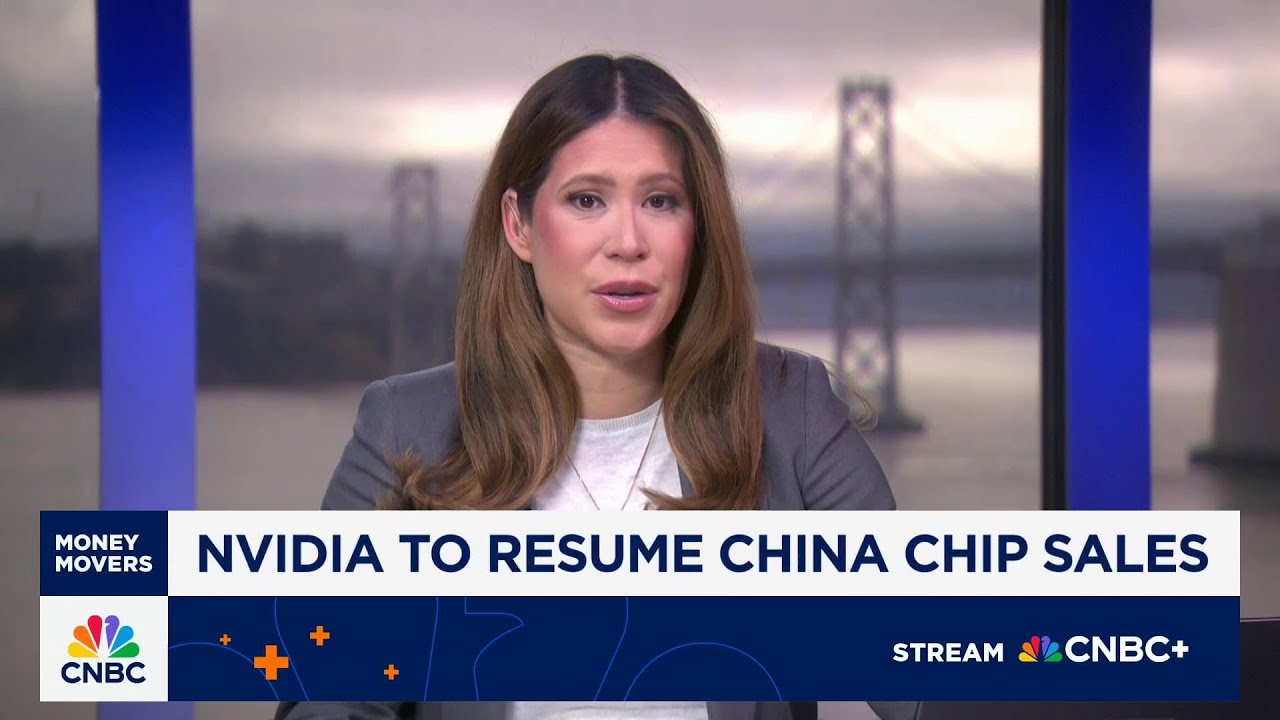
🎥 Nvidia set to resume China chip sales
⏱️ Duration: 2:27
🔗 Watch on YouTube
Overview
This video segment from CNBC's "Tech Check" discusses Nvidia's renewed ability
to sell chips in China after regulatory changes. The focus is on the strategic
implications for Nvidia, particularly regarding its software ecosystem (CUDA),
and the broader context of U.S.-China competition in AI technology.
Main Topics Covered
- Nvidia's resumption of chip sales in China (specifically the H20 chip)
- The importance of Nvidia’s CUDA software ecosystem for AI development in China
- Competitive dynamics between Nvidia and Chinese rivals, especially Huawei
- U.S. export policy evolution: from hard bans to controlled diffusion
- The broader U.S.-China race in AI technology and standards
Key Takeaways & Insights
- The real competitive advantage for Nvidia in China is not just its hardware, but its entrenched CUDA software, which serves as the foundation for AI development.
- Even though Nvidia’s H20 chip is technically inferior to competitors like Huawei’s Ascend, Chinese AI developers continue to rely on CUDA.
- If the U.S. had imposed a total ban on Nvidia chips in China, it could have backfired by pushing Chinese developers to adopt or create homegrown alternatives, weakening Nvidia’s ecosystem lock-in.
- Current U.S. policy favors “controlled diffusion” over total bans, aiming to keep American technology standards dominant globally, even in rival markets.
- This approach helps maintain U.S. influence and strategic leverage in the global AI race.
Actionable Strategies
- For tech companies: Focus on building sticky software ecosystems (like CUDA) that create long-term lock-in, even when hardware access fluctuates.
- For policymakers: Consider the unintended consequences of hard technology bans, which may accelerate rival self-reliance and ecosystem development.
- For investors: Monitor not just hardware sales but also software ecosystem entrenchment as a key indicator of long-term competitive advantage.
Specific Details & Examples
- Nvidia’s H20 chip, now permitted for sale in China, is slower than alternatives like Huawei’s Ascend, but remains relevant due to CUDA’s dominance.
- Chinese tech giants (e.g., Alibaba, Deep Sea) continue to build on CUDA, highlighting its pervasiveness.
- Huawei is reportedly redesigning its next AI chip to help developers move away from CUDA, aiming to capture those reliant on Nvidia’s software.
- The phrase “necessity is the mother of invention” is repeatedly referenced, illustrating how bans can spur innovation in rival countries.
Warnings & Common Mistakes
- A full ban on American technology could unintentionally strengthen rivals like Huawei by forcing them to innovate and build their own ecosystems, potentially eroding U.S. influence.
- Policymakers should avoid over-reliance on blunt restrictions that may yield the opposite strategic effect.
Resources & Next Steps
- Stay updated on U.S. export control policies and their global impact on tech ecosystems.
- Watch for further developments in how Chinese companies adapt to controlled access to U.S. technology.
- For further insight, review earlier commentary from David Saxe and statements from Nvidia CEO Jensen Huang regarding ecosystem strategy and global standards.
📝 Transcript (90 entries):
Eastern and streaming on CNBC plus. >> Shares of Nvidia, rising today, as the chip maker says it
expects to be able to sell in China again. But can it pull ahead of rivals in that country. Our
Deirdre Bosa is watching that in today's tech check. Morning D.
>> Hey good morning Carl. So Wall Street is busy calculating the revenue rebound. But here is the
bigger picture. This isn't just about selling chips. Again it's about keeping China inside Nvidia's
software ecosystem.
Now the H20 chip. It is actually slower than many of the alternatives on the market, including
Huawei's Ascend. But China's AI developers, they're still building on Nvidia's Cuda. That is the
software layer that tells the chips what to do and how to train the AI models. So it's like an
operating system for AI development that everyone from Alibaba to Deep Sea can build on.
And that is the real lock in. Had Washington fully blocked Nvidia from selling even downgraded chips
like the H20, it would not have stopped Chinese AI. It would have just accelerated Huawei's push to
build a homegrown alternative, something David Sax was talking about earlier on in the hour. Now,
Huawei is already reportedly redesigning its next AI chip to make it easier for developers to switch
off Cuda. The goal is to win over Chinese companies that still rely on Nvidia software, even when
they can't easily buy the software, so a full ban could have handed Huawei the opening that it
needed a captive market with no choice but to build around its own chips and its own ecosystem.
Necessity is the mother of invention, that phrase that our audience has heard often this year when
it comes to the race between the US and China and AI. So now with H20 licenses, granted, Nvidia gets
to keep selling just enough to stay relevant. Keep Cuda locked in as the default and argument that
Jensen Huang certainly leaned on in his discussions with President Trump. And this tracks a bigger
shift, as well as a strategic shift that we've seen emerging from this administration. And that is a
move away from hard bans toward a policy of controlled diffusion.
The idea that if you block AI access entirely, it forces adversaries like Huawei to build
independently. So instead, the goal is to keep American technology and American standards entrenched
globally, even rival markets. And again, that is another thing that David Saxe told you guys earlier
that is key to winning the AI race. Jensen Huang hit on those points. That has been a successful
playbook so far in this administration.
>> Well, no question Wall Street is happy about it. I do wonder though, what if there are security
implica.