 YouTube Deep Summary
 Extract content that makes a tangible impact on your life
🤖 AI-Generated Summary:
Ключевые выводы и инсайты
- IB (International Baccalaureate) — это комплексная образовательная программа с оценками от 0 до 7 по каждому предмету, максимальный балл — 45 с учетом дополнительных баллов за обязательные компоненты.
- Успех в IB зависит не только от академических знаний, но и от умений организовывать время, критически мыслить, проявлять настойчивость и поддерживать психическое здоровье.
- Выбор предметов должен соответствовать вашим целям и интересам, а не только рекомендациям о «самых сложных» предметах.
- Мотивация является ключевым фактором, который помогает преодолевать трудности в течение программы.
- Рефлексия — важный инструмент для понимания своих сильных и слабых сторон, а также для корректировки учебных стратегий.
- Нет универсального рецепта для успеха, важно найти подходящие именно вам методы обучения и поддерживать баланс между учебой и отдыхом.
Практические стратегии
- Найдите свою мотивацию — она может быть связана с личными целями, семьей, наградами или поступлением в вуз.
- Регулярно анализируйте свои результаты и учебные методы, корректируйте подходы на основе того, что работает лучше.
- Организуйте учебное время: выделяйте 3-4 часа в будни и до 8 часов в выходные на учебу с перерывами на небольшие, неэнергозатратные активности (например, перекус, короткие видео, музыка).
- Избегайте больших перерывов во время учебных сессий, чтобы не терять концентрацию и мотивацию.
- Регулярно повторяйте изученный материал, используя, например, таблицы или списки тем для контроля.
- Выбирайте темы для внутренних заданий и эссе, которые вас действительно интересуют, чтобы повысить качество работы.
- Следите за психическим здоровьем, не бойтесь обращаться за помощью и делиться своими переживаниями.
Важные детали и примеры
- IB включает 6 предметов: 3 на повышенном уровне (HL) и 3 на стандартном (SL), где HL сложнее и глубже.
- В программу входят дополнительные компоненты: CAS (социальное служение), TOK (теория познания) с презентацией и эссе, EE (расширенное эссе) — исследовательская работа.
- Автор видео выбрал сложные предметы (HL физика, математика, химия), что усложнило учебный процесс, при этом советует выбирать предметы по душе и в соответствии с будущей специальностью.
- Автор использовал Excel для систематизации тем и повторения материала.
- Пример личной мотивации — семья, которая помогала преодолевать трудности.
- Личные истории: сомнения в себе мешали автору подать документы в топовые ВУЗы, но итоговый результат все же оказался успешным.
Предупреждения и распространенные ошибки
- Не выбирайте предметы только потому, что они считаются «самыми сложными» для улучшения резюме.
- Не игнорируйте внутренние оценки и эссе — они составляют значительную часть итоговой оценки.
- Не пытайтесь читать сотни примеров эссе — достаточно понять критерии оценки.
- Избегайте больших перерывов во время учебы, которые могут снизить продуктивность.
- Не стоит подавлять свои эмоции и переживания — это негативно влияет на учебу и мотивацию.
- Не сомневайтесь в своих способностях и не ограничивайте себя из-за страха неудачи.
Ресурсы и следующие шаги
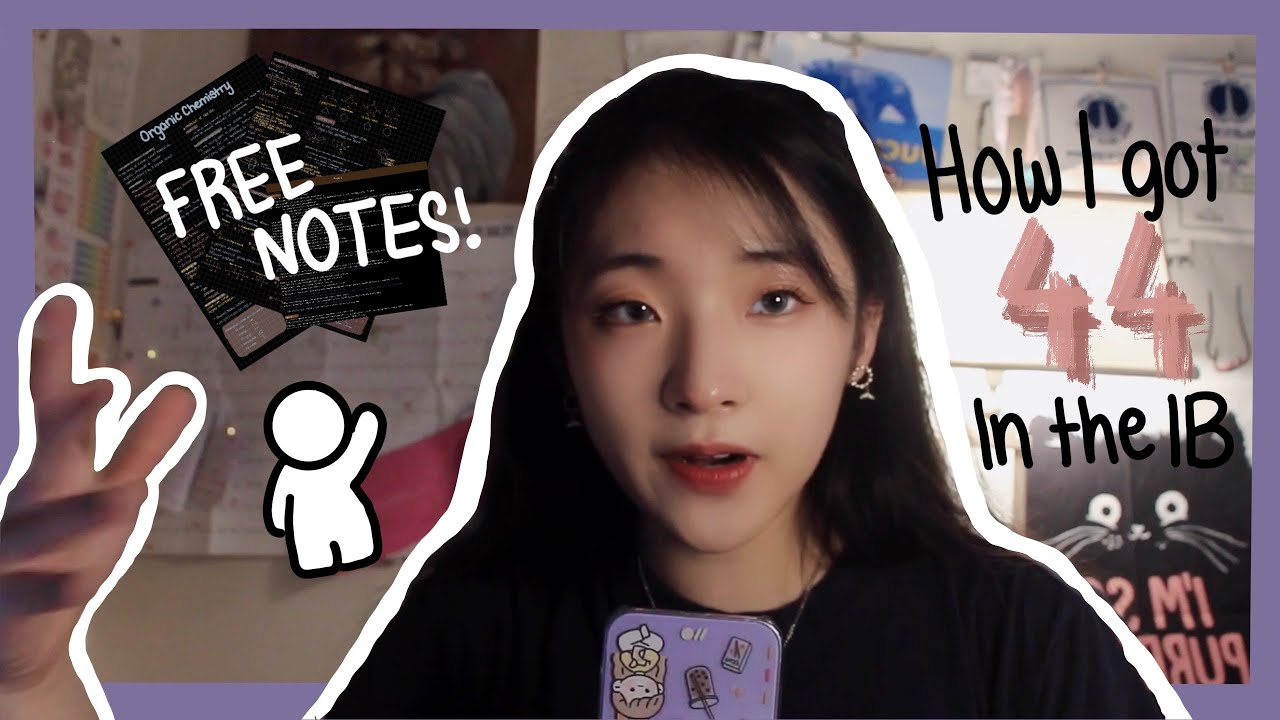
- В описании видео будет ссылка на Excel-файл с тематическими таблицами и бесплатными ресурсами для подготовки.
- Пример бесплатных заметок по химии автора доступен по запросу через Instagram или комментарии.
- Рекомендуется продолжать искать собственные эффективные методы обучения и регулярно рефлексировать.
- Совет — обращаться за поддержкой к наставникам, учителям и психологам при необходимости.
Основные темы
- Структура и особенности программы IB
- Выбор предметов в IB с учетом личных целей
- Значение мотивации и рефлексии в учебном процессе
- Эффективные методы организации учебного времени
- Повторение материала и подготовка к экзаменам
- Психическое здоровье и его влияние на успех в IB
- Личный опыт и уроки, извлеченные автором из собственного обучения
📝 Transcript (542 entries):
[Music] hello welcome to my second ivy video i realized that i have a narcissistic cat in my background but i bought on taobao and i didn't read it properly so i bought this astronaut guys i wanted to share this so if you open it up if you open his
helmet it's a flashlight isn't that so cute okay yeah anyways it has nothing to do with the video well in this video i will be introducing
ib to people who are considering on taking the ib or just getting started then i will share with you guys some of the studying tips i used to get to this to get the score that i got and finally i'll end with some conclusions some regrets and a final message so please watch to the end what does the ib uh wikipedia says it better than me so ib is graded from a 0 to 7 scale 0 being the lowest and 7 being the highest although i believe 0 means turning in nothing generally ib students take six subjects three higher levels and three standard levels hls and sls are distinguished by their difficulty so hls tend to have more topics
within their subjects and they also go more in depth within certain topics in addition higher levels have more teaching hours and their questions tend to be more challenging than sl your final exam and your internal assessment determine your final grade internal assessments or ias are internally assessed and their form depends on the subject so for example sciences are often written reports i believe visual arts and design are like projects and languages are oral assessments in addition to taking six subjects all ib students are required to complete cast to knee cast is community service tok is theory of knowledge where you have to do a 10-minute presentation along with writing an essay an ee is extended essay where you basically write on a topic of choice these core subjects provide three bonus points and so altogether the maximum mark a student
may obtain an ib is 45. should you take the ib so i will not say yes or no because i don't want to dictate your choice just because of my own experience so rather than me telling you whether or not you should take ib i will tell you what you should expect going into ib and based on that you can determine whether or not ib is fit for you first and foremost to what extent high school is going to be challenging depends on you i know there's a lot of articles that claim that ib is one of the hardest curriculums out there but i would argue that ap or a levels they all have the potential to be just as hard if you are naturally a high achieving student you will go out of your own way to choose challenging subjects or like spend more time studying as a result your high school experience is going to be hard but if you're someone that's looking to just achieve your average score or you have a lot of commitments outside of school then you might choose easier subjects your your high school workload might be lighter because you will want to choose their easier routes your high school experience comes down to your values and your goals however i will mention that ib is challenging not just content wise but time wise because your final grade doesn't just depend on your final exam but also your ias and your ee's you're going to find yourself spending a lot of your time outside of school working on those performing well in ib means consolidating many skills including organization skills critical thinking perseverance and on your academic skills many of which you can develop throughout your dp years in other words you don't need to be an academic genius in order to do well in ib as long as you have the determination and the willingness to put in the time and effort you can do well in ib what subjects should you take if you already have a measure like a field in mind choosing your subjects shouldn't be as hard as you make it to be but i can still understand why many of you may still be anxious about this question because i was in a similar situation going into grade 11.
when i spoke with my academic counselors they all told me that u.s universities want to see students take the hardest subject so i chose higher level physics higher
level math a and higher level chemistry which were the harder courses hardest courses provided at my school i chose those subjects despite the fact i knew i wanted to go into a major that concentrated around biology and as a result of that decision i had to also study for my ap bio exam on top of my ip workload which made my high school experience a lot worse so the more my story is just to go with your gut when choosing subjects and choose subjects that make sense for example if you want to major in a econ you should take econ um as well as subjects that will support it such as psychology or business and if you're having a trouble choosing subjects outside of your intended major for example english language and literature or english literature the choice you may hear won't matter that much because you're not going to be majoring in english anyways if your university has requirements for certain majors you should probably follow those too now moving on to my studying tips
[Music] the first tip i would say also one of the most important tips is to find your motivation your motivation will act as your field to keep you going during your dp years this motivation doesn't have to be that like profound it can range from a school award to your university goals but the thing about this motive is that it can't be something you determine for yourself most people recognize their motivation after facing some form of trauma or like an obstacle during their learning journey so for instance for me um second
semester of grade 11 was the hardest after i watched like my grades fall i reflected upon why exactly i want to do well in high school and i realized that my driving force was or is my family so every time i felt down or demotivated i just think about that goal and i'm able to persevere and this leads me to my second tip which is reflection [Music] in regards to like studying without reflection you will continuously make unintended consequences that will leave you nowhere so it is really important that you're
reflecting upon your strengths and weaknesses throughout your high school period the most crucial time to reflect is after taking an assessment parallel your studying habits to the grades you get if you notice that during more past papers or textbook problems actually helping you then adjust your studying schedule to incorporate more of those type of questions and the earlier you do this the faster you will come to understand yourself as a student as well as like what type of study techniques is works effectively on you reflecting is not just limiting limited to your studying habits but you should also be reflecting upon yourself as an individual based on my own experience students who live with a victim mentality fail to recognize their own faults this is where motivation comes along motivation and reflection can have come hand in hand you need to reflect in order to find your motivation and you need to be motivated in order to reflect and once you're able to reflect and find your driving force you will naturally want to change yourself for the better my third tip is on studying techniques and setting schedules [Music] regardless of what like pinterest youtube or instagram my show you don't need aesthetic or like super clean notes and studying schedules in order to do well in ib a super famous example of
this is the panodora technique where you're incorporating timelines into your studying schedule trust me i have tried all every technique out there but none of them worked for me you see i'm a very persistent student so whenever i come across a question that i can't solve i will do everything to solve it even if it means contemplating about it for the entire day especially for math and cap and physics a question or two can sometimes take me through five four to five hours to do incorporating timelines into my studying schedule just like never worked for me so instead i adapted myself to studying
a certain amount of hours every single day for example during the weekdays i would dedicate four hours to studying like straight after school and then during the weekend i would study for eight hours and don't get like shocked you don't need to study for that long in reality i gave myself plenty amount of unplanned breaks within those studying periods so realistically speaking i'm probably
studying for five hours during the weekends and three to four hours during the weekdays and obviously this will vary with a type of assignment the breaks i take within those studying periods are like small activities so small activities are activities that don't require a lot of energy and won't break your studying momentum so examples of these are at least for me are eating watching small youtube videos texting friends or listening to music once you're done with everything on your checklist you're free to do whatever you want but it's really important to note that during the studying period you're finishing everything in one go you can't just be studying for a little bit and then going outside doing some some like big activity like playing the video game watching a movie or going outside and then coming back to studying that's because once you've completed that big activity you would have used so much energy that you're more likely to want to take more breaks and what ends up happening is you'll find yourself taking more breaks than intended this will come with practice so once you create a habit of dedicating certain hours like per day to just studying even after you finish everything by that eight hour or the fifth hour you would want to fill the rest of that period with studying in order to feel satisfied which is really helpful because you can use that extra time to set to revise older topics which ties on to my next tip which is revise your older topics [Music] from the day you start learning content in class there's a very good chance of that being in your exam so do not underestimate
the importance nor difficulty of certain topics so before my mocks i created like this excel sheet where i where each tab was dedicated to a certain topic or subject but i made it in a way so that it was very easy for me to see like every single topic and subsection so every time i finished my studying
period before i can do whatever i want i would go on to the excel sheet give myself like mini heart attacks and remember oh yeah that topic exists and then i would take that topic and i will read i'll reread it over again or do some exam style questions related to that topic fifth tip and my last tip is your mental health [Music] i can tell you all these tips but in the end it is your choice whether or not you take them in but if you are not in the right mindset or you're currently going through something adapting yourself to effective setting tips will be really extremely hard for you so if you believe that you are currently suffering through a mental illness seek help and even if it's not as severe you should never choose to bubble up your own feelings because chances are there's a lot of people in your grade that are going through the same thing as you finding the right person to talk to is an excellent way to release your stress and redirect yourself into the right direction so i've received a lot of dms asking for tips on ia's e's and t okay so i'll also quickly touch upon them as well my first tip for iaes and toks is you don't need to read hundreds and hundreds of examplers the whole point of reading examplers is to just get a feel of what's an i b e e t okay and eyes are like whenever you read examples you should be looking for how that student was able to reach all the criteria so that you can do so too which leads on
to my second tip which is choose topics that you're passionate about so i don't know how well i did on my ias and my to case but i do know i did well on my e and the main reason being i was passionate about my topic my favorite artist is peterborough girl and i wrote about him prior to writing those essays i've read a lot about him i visited museums to see his artworks i read about most of his art most of his famous artworks as a result i knew my topic really well and once you understand your topic really well you'll develop a good sense of what's considered good writing related to your topic and obviously you can't just rely on yourself you you need to talk to your mentor your supervisors and your teachers to make sure your judgment is right in the end if you put your best effort into that final draft and you believe that that final draft is the best it can be in the most non-biased way possible it's probably a good writing and just submit it so you can move on and focus on other things finally before i end this video with my final message i like to share my regret [Music] my biggest regret in high school would probably be doubting myself since a young age i'd always convince myself that no one thought i am capable of performing academically well as a result i grew up with a pessimistic and doubtful mindset but after receiving my scores and noticing people's reactions i realized that the only person who was surprised by my score was myself like everyone around me saw my sword coming except for myself in hindsight i realized that doubting myself has kept me from so many opportunities and one being my college applications because i want to go into medicine john hopkins was my dream school well john hopkins ucla or an ivy league
so during my college applications i convinced myself that i didn't have a chance at john hopkins so i didn't apply and the only reason why i applied to ucla was because i didn't have to write anything extra all i had to do was like take a checkbox and so that's why i applied and so in the end i was lucky that i got into the school that i wanted to go to but this isn't always the case so for everyone watching this video don't doubt yourself i recognize that like most of the tips i gave in this video are probably not a surprise to anybody and you see i wasn't the perfect student in fact a lot of things i did before exams would probably be condemned by many for example i was playing animal crossing during distance learning i was watching netflix while i was working i was on my phone a lot probably more than any other time but in the end things ended up just fine there is no perfect recipe how to get a 44 and above perhaps for you creating pretty notes will work for you or having multiple breaks within your studying schedule is better for you or having strict time schedules is something you prefer but in the end we're all very very different and we have different studying habits but if there's anything to take away from this video and something that's shared among all of us students and will undoubtably have positive effect on all of us are to find your motivation to reflect and to improve your mental health because once you find your motivation you will want to reflect on your on your self-esteem which in turn will improve your mental health and once you reflect on your strengths and weaknesses you'll naturally want to look for studying habits that will work for you and obviously there will be days when you feel defeated or you face a failure or you want to quit but when it comes to those moments i would cope with them by looking myself at a wider lens i would recognize my previous accomplishments and doing that geared myself into having a more positive mindset and it pushed me into wanting to look more in the presence and most importantly make me want to seek ways in order to improve myself as both a student and an individual that's it that's all the tips i have the tips i use to get a 44.
i lost a recording for this part of the video so i'll summarize what i had said i'll add in the description box below a link to the excel sheet i mentioned in my video and in the excel sheet you'll find some free resources i use for studying i'll also include a sample a free sample of my chemistry notes and if you're interested in more you can let me know via instagram dms or under the comments below [Music] you